
JackpotCity mobile browser and casino formats
 Available in AU
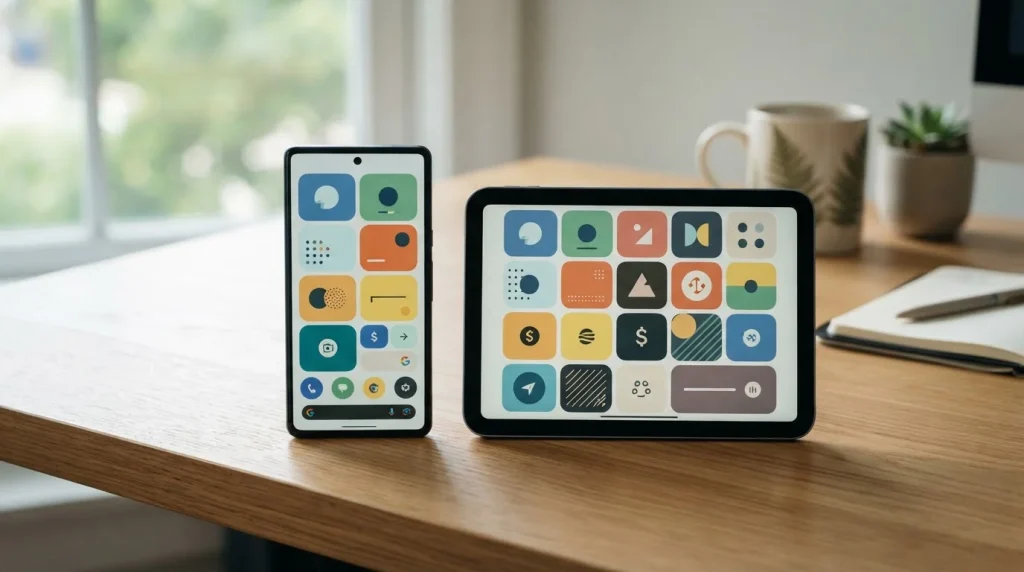
JackpotCity has a mobile-accessible casino website within its international product. Slots, tables and live-dealer content raise different small-screen questions: how much space controls need, what video streaming requires, and what happens when a connection is interrupted. Mobile presentation is distinct from the underlying rules of each game.
Table of Contents
- Mobile browser access as part of the international casino
- Navigation and touch controls on a compact screen
- Live streams, bandwidth and session interruptions
- How screen demands differ across game categories
- Battery, data consumption and device privacy
- Accessibility and readable information
- Common questions about JackpotCity on mobile
- Mobile access is a presentation question
Mobile browser access as part of the international casino
JackpotCity supports mobile website access, so a browser is part of the international casino product rather than an entirely separate game catalogue. Its broader offering includes slots, table games and live-dealer formats. These facts establish the kind of content a mobile visitor may encounter, but they do not establish a particular handset specification, download requirement or performance level for every device. Mobile access describes how a product is presented, not how reliably a particular network will deliver it.
A mobile browser creates a smaller working area than a desktop display. Menus, game cards, account controls and help links therefore compete for space. A useful way to understand the design is to distinguish discovery, play and account administration. Discovery is the task of moving between categories; play concentrates attention inside a single game; administration involves reading terms, reviewing account records and managing support requests. Each task places different demands on screen size and input controls.
JackpotCity’s portfolio includes categories with quite different interface needs. A slot typically centres on a compact set of reels and controls. A table game also needs to explain its betting areas and results. A live-dealer format adds an audiovisual stream and controls that need to remain legible while video is on screen. Those characteristics are general interface considerations; they are not claims that every JackpotCity title has the same layout on mobile.
Small-screen browsing also changes the value of concise labels. A category name that works inside a wide desktop menu may be shortened or moved behind a navigation control on a phone. This does not alter the mechanics of a game, but it can affect how easily users distinguish slots from live tables or locate non-game sections. The games and providers overview explains the catalogue categories without assigning handset-specific capabilities to individual titles.
Navigation and touch controls on a compact screen
A compact interface has to separate a user’s intended action from nearby controls. A touch target that is too narrow increases the chance of accidental taps, particularly when a page contains side panels, a moving game window or a dismissible notice. Visual hierarchy matters: headings identify the active area, clear labels describe its function, and sufficient spacing helps prevent confusion between navigation and betting controls.
Mobile pages often reorganise content instead of merely shrinking it. A horizontal catalogue can become a vertical sequence of cards, while a wide information table may require scrolling within a contained region. This is an explanation of responsive design in general, not a claim about the exact CSS breakpoints or layout system used by JackpotCity. The practical issue is whether the reader can keep the context of a section while moving between it and the next one.
Different interactions also have different levels of reversibility. Opening a menu is easily corrected; making a financial transaction or placing a stake has consequences that may not be reversible. For that reason, a clearly separated interface is especially important where money is involved. Small controls, overlays or a page that shifts during loading can make an otherwise simple task harder to interpret.
Portrait and landscape orientations can display the same material differently. Portrait works naturally for scrolling, reading terms and reviewing lists. Landscape offers more horizontal room for a table layout or a video feed but less height for explanatory text. Switching orientation can cause reflow, so preserving a reader’s place is more important than filling every available pixel.
A concise visual checklist for any mobile gambling interface is useful even as a design-analysis tool: distinct navigation labels; readable stakes and currency symbols; clear separation between information and actions; visible help text; and a predictable way to close panels. None of these items alone proves that a platform is safe or suitable. They identify interface qualities that affect comprehension.
Live streams, bandwidth and session interruptions
Live-dealer games add a network-intensive component to the traditional game interface. In a streamed format, a camera feed, an interaction layer and the exchange of game events must all reach the user. The visual stream can lag while account messages or interface elements update through a different channel. A delay on one component does not automatically mean the entire service is offline or that a transaction has been cancelled.
A shared mobile connection can change quality as the device moves between rooms, cellular coverage areas or wireless networks. Video may lower its resolution, pause to buffer or take longer to recover. These are standard properties of internet streaming, not measured observations about JackpotCity’s servers or a particular live-dealer provider. Devices also differ in how browsers allocate memory and suspend background tabs.
An interrupted session should be considered in terms of its parts. There is the state shown in the browser, the state recorded by the operator and any payment or wager event managed separately. Refreshing a screen might reconstruct the display while leaving the underlying event unchanged. Conversely, a visible loading spinner does not by itself prove an event was processed. The important distinction is between a screen’s appearance and an authoritative account record.
Backgrounding a mobile browser can pause animation, audio or network activity, depending on the device and operating system. Incoming calls, battery-saving settings and app switching introduce extra interruptions that do not occur as frequently on a dedicated desktop screen. That is one reason short live sessions can feel more fragile than browsing a static catalogue, even when both use the same mobile connection.
Network speed is only one part of the experience. Latency affects how quickly actions receive a response, bandwidth affects how much data a stream can deliver, and signal stability affects whether the connection remains usable. High advertised bandwidth does not remove packet loss or interruptions. These distinctions help explain why a clear interface should distinguish an input waiting to send from one that has been accepted.
The account and verification guide considers how account records and financial checks differ from what appears on an interface. The distinction matters when a mobile page reloads during an administrative operation as well as during a game.
How screen demands differ across game categories
The same mobile device can handle several types of content, but their demands are not interchangeable. Slots often emphasise animation and a comparatively small control area. Roulette and blackjack may require a larger view of choices, current state and result history. Live game shows may prioritise the moving video picture while still showing the action panel. Video poker and bingo introduce their own information density through cards, numbers and repeated rounds.
These differences are more useful than a simple mobile-versus-desktop verdict. A detailed table layout may remain understandable on a tablet even if it feels cramped on a narrow phone. A visually simple slot may scale down easily while its animations still consume processing power. A live dealer stream may look smooth on a strong wireless connection while struggling on unstable mobile data. No single device category predicts every outcome.
The comparison below is a general accessibility and engineering framework, not a speed test or operator performance report. It describes where attention typically goes and which design constraint tends to dominate. Actual presentation depends on the game’s implementation, device and browser.
| Format | Primary mobile demand | Typical design trade-off | Reader-facing impli |
|---|---|---|---|
| Slots and jackpots | Animation and control clarity | Visual detail versus screen space | Labels and balances need to remain distinguish |
| Roulette and blackjack | Multiple choices and game state | Dense table view versus touch-target size | More zooming or panel changes can impair context |
| Live dealer tables | Video plus interaction controls | Stream area versus readable action panel | Connection stability and clear status cues matter |
| Live game shows | Large moving video scene | Immersion versus compact controls | Video can compete with essential text |
| Bingo and video poker | Cards, numbers and repeated state changes | Infor | Readable text and state tracking are essential |
Game providers can build different interfaces even within the same category. JackpotCity’s international catalogue features several studios, including Games Global and Pragmatic Play, while live-dealer content involves a distinct production model. This is a reason to assess games by their interface type rather than assume one mobile pattern applies to every supplier.
The distinction between presentation and mathematical risk remains important. Smaller screens and smoother animations do not change a game’s return-to-player model, house edge or volatility. Those topics are covered separately in the games guide; none of them becomes a predictable outcome because a game is played on a phone.
Battery, data consumption and device privacy
Mobile play combines the demands of a browser, graphics processing and sometimes continuous video. Streaming can draw on the screen, processor and wireless radio at the same time. Brightness, connection quality, background applications and the device’s battery condition also affect energy use. It would be misleading to attribute a universal battery figure or hourly data volume to JackpotCity from these general factors.
Data use is particularly variable in live video. A higher-resolution stream commonly moves more information than a static page, yet compression, frame rate and dynamic quality adjustments change the result. A phone on a metered plan may therefore experience the same interface very differently from a desktop connected through unmetered broadband. The network also affects buffering and responsiveness independently of data charges.
Privacy is a separate concern. A personal handset can retain browser history, downloaded files and autofill data, depending on settings. A shared device creates additional risks if someone else can see notifications, account details or saved credentials. These are general browser and device behaviours. They should not be read as claims about JackpotCity storing a particular category of information or using a particular tracking service.
A mobile site can appear visually private while still placing sensitive details on screen. Browser tabs, recent-app previews and lock-screen notifications can reveal information in ordinary daily use. Screen sharing and screen recording can expose content beyond the intended recipient. Device-level protections help distinguish local confidentiality from protections supplied by an online service.
Financial services introduce another distinction: browser convenience is not equivalent to the finality of a transfer. The international JackpotCity catalogue includes bank cards, e-wallets and regional cryptocurrency examples. A cryptocurrency transfer can be irreversible, and its market value may change while assets move. The payments guide explores those mechanics without implying access to an Australian casino cashier.
A privacy-conscious design makes warnings readable and separates sensitive operations from entertainment graphics. It also avoids relying solely on colour to communicate a status. A readable phrase such as ‘pending’ or ‘completed’ is easier to interpret under low brightness, colour-vision differences or a reduced-contrast display. These are general interface principles, not a description of JackpotCity’s internal transaction states.
Accessibility and readable information
Accessible mobile content starts with adjustable text, coherent heading order and controls that remain identifiable without precise gestures. Touch screens introduce a challenge for people with tremors or limited dexterity; small targets and gestures with no alternative can make navigation difficult. A screen reader introduces a different requirement: controls need meaningful labels, not just icons that appear obvious to sighted users.
On small displays, zooming may help with text but can obscure surrounding context. A player reading game instructions or terms should be able to distinguish the current section from the surrounding navigation. Clear headings, visible focus cues when a keyboard is used and adequate spacing improve understanding without changing any gambling mechanics.
Mobile browsers may support larger system text, reduced motion and high-contrast modes. A website does not automatically honour every preference. If animated content becomes overwhelming or a control is difficult to perceive, the interface design—not the user’s familiarity alone—can be part of the difficulty. The same considerations apply to general financial websites, streaming services and digital entertainment.
A game’s most important text may be less prominent than its visual effects. Stake amounts, currency notation, round history, game instructions and help links should remain understandable even when animation draws attention elsewhere. Clear, unambiguous language reduces the chance that interface changes will be mistaken for a change in rules.
Audio is another dimension of accessibility. Live content may include spoken explanations, background music or cues associated with a result. A muted phone, noisy environment or hearing impairment changes what can be perceived. Essential information is easier to use when it is also represented visually and not dependent on one sound. This is a design principle rather than a claim that all individual games provide captions or visual equivalents.
These considerations suggest a different way of comparing mobile game experiences: not which phone looks most impressive, but whether the underlying information can be understood across screen sizes, input methods and connection conditions. Technical polish and meaningful access are related, yet neither alone determines financial risk.
Common questions about JackpotCity on mobile
Does JackpotCity have a mobile website?
Yes. JackpotCity's international casino product supports access through a mobile website.
What types of JackpotCity games are discussed for mobile?
The international catalogue includes slots, table games, live dealer formats, bingo and video poker. How each game displays depends on its implementation and device.
Why can a live casino stream pause on a phone?
Live video relies on bandwidth, latency and a stable connection. Signal changes or backgrounding a browser can interrupt streaming.
Does a mobile interface change a game’s mathematical return?
No. Screen size does not change RTP, house edge or volatility defined by a game’s mechanics.
Where can someone in Australia find gambling-harm support?
Gambling Help Online offers free, confidential support at gamblinghelponline.org.au and through the National Gambling Helpline on 1800 858 858.
Mobile access is a presentation question
JackpotCity’s mobile website extends the international casino product to a smaller browser screen. The meaningful differences between mobile formats arise from navigation, touch precision, video delivery, screen readability and the treatment of interruptions, rather than from claims about a particular app or device benchmark.
The international game catalogue creates several distinct interface challenges: a moving slot, a dense table and a live streamed scene do not place identical demands on a phone. Keeping those differences separate makes mobile descriptions more useful and avoids confusing convenience with guaranteed performance or a change in gambling risk.